
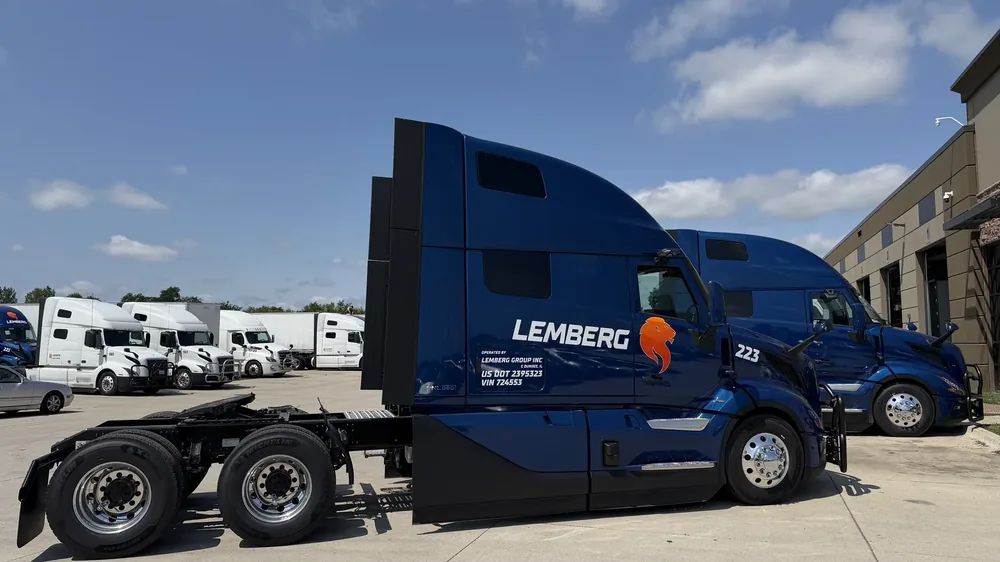
What a drop actually changes
On a live load the truck arrives, waits, is loaded and leaves — and the driver's hours run for all of it. On a drop, the carrier leaves an empty trailer at your facility and takes away a loaded one. Loading happens whenever your dock has the people for it: overnight, between shifts, at the end of a week.
Nothing about the freight changes. What changes is that nobody is standing in your yard with a 14-hour window running down, which is the mechanism behind most detention.
Why it is not simply a service to switch on
A trailer parked at your dock is a trailer that is not under a load. For the carrier a drop programme means equipment sitting idle by design, plus a tractor making a trip specifically to swap it. That capacity comes out of a finite pool of trailers.
This is why any carrier will ask about volume before agreeing to one, and why a carrier that promises drop capacity on a single spot load is either misunderstanding the request or planning to broker it.
Where the arithmetic turns
A drop starts to earn its keep when several of these are true at once:
- The lane repeats. One or more loads a week on the same route, not an occasional shipment.
- Your loading window is unpredictable — order-driven, staffed unevenly, or dependent on production finishing.
- Your dock is busiest exactly when carriers want to arrive.
- Detention is already appearing on invoices, or carriers have started pricing the lane as though it will.
One-off loads on scattered lanes almost never justify it. The equipment cost is real and it has to be spread over something.
What it asks of your yard
Mostly space and a little discipline. A trailer needs somewhere to sit without blocking a door, room for a tractor to get in and back out, and someone on your side who knows it is there and when it will be full.
Most arrangements also set a limit on how long a trailer may stay before it starts costing something. That is not a penalty clause for its own sake — the trailer is the carrier's asset, and an asset that stops moving stops paying for itself.
How to ask for one
Come with three things: the lane, the weekly volume, and the hours your dock actually runs rather than the hours on the sign. A carrier can answer a drop request honestly with those. Without them the answer is a guess, and guesses on equipment allocation tend to be optimistic.